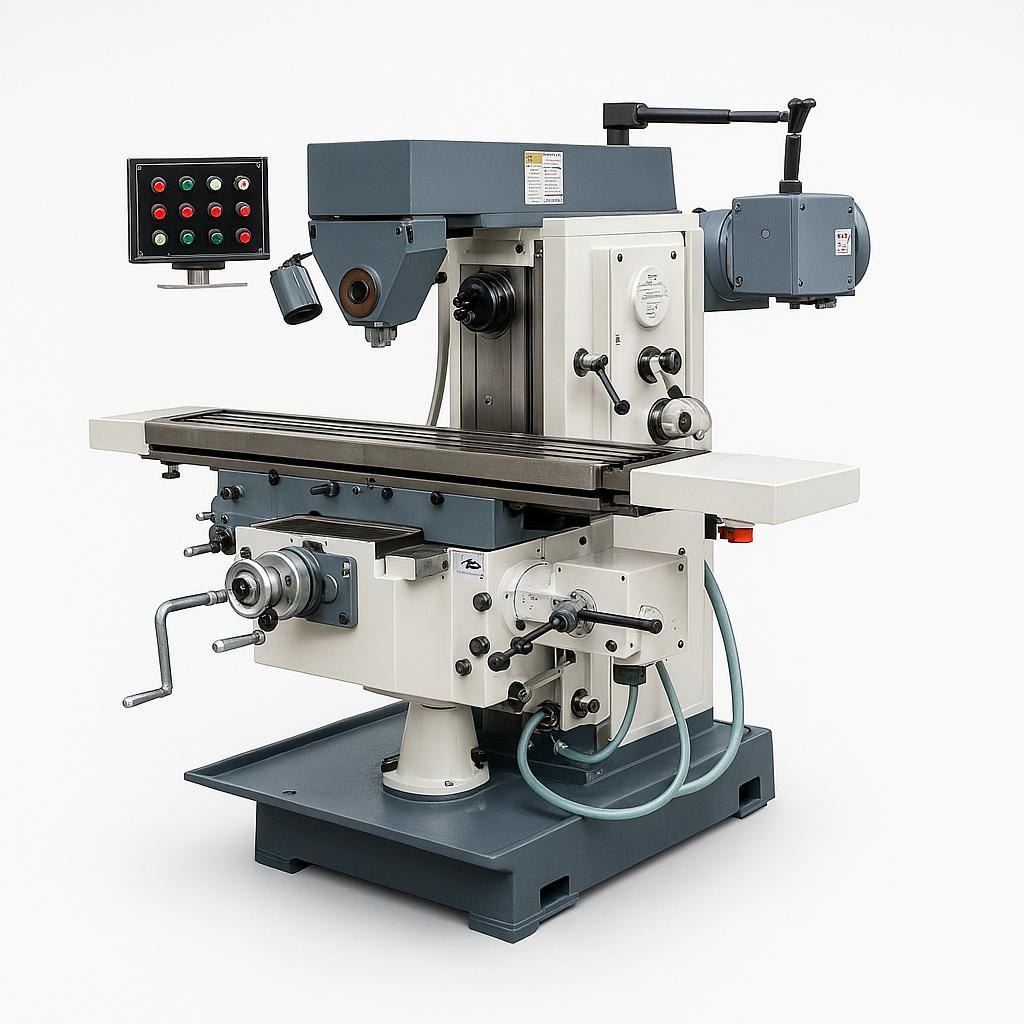
A knee-type milling machine is a highly versatile manufacturing tool where the worktable rests on a vertically adjustable, cast-iron component known as the “knee”. This configuration allows the entire table to slide up and down along the machine’s main vertical column to accommodate workpieces of various heights. Historically derived from the iconic Bridgeport design invented in 1936, these machines remain the backbone of prototyping, repair work, and machine shops due to their unique operational flexibility.
Core Working Components
- Base: The heavy foundation that anchors the unit and absorbs cutting vibrations.
- Column: The main vertical structure housing the motor, gears, and electrical drives.
- Knee: The adjustable casting that rides vertically along the column ways to control Z-axis height.
- Saddle: Sits on the knee and slides front-to-back to provide Y-axis movement.
- Table: Rests on the saddle and moves left-to-right along the X-axis to feed workpieces past the cutter