
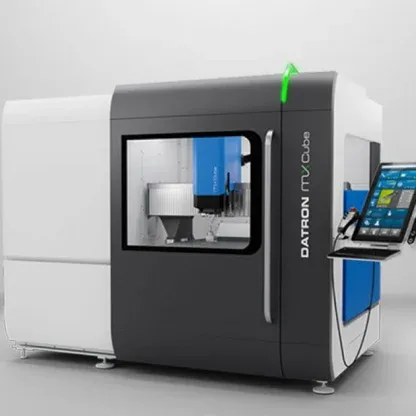
A 4-axis CNC machine is a versatile manufacturing tool that adds one rotational axis to the three traditional linear axes (X, Y, and Z). This extra axis—usually called the A-axis—allows the workpiece to rotate while it is being cut, making it the industry standard for machining cylindrical parts, engraving curved surfaces, and cutting complex geometric patterns. [1, 2, 3, 4, 5]
How the 4 Axes Move
- X, Y, and Z Axes: The standard linear movements (left/right, front/back, up/down).
- A-Axis (Rotational): The workpiece rotates around the X-axis.
(Note: If the rotation happens around the Y-axis, it is called the B-axis; around the Z-axis, it is the C-axis. The A-axis configuration is the most common).